
A filling repairs a small to moderate area of decay within a tooth. A crown covers and protects the entire tooth when damage is extensive or after a root canal.

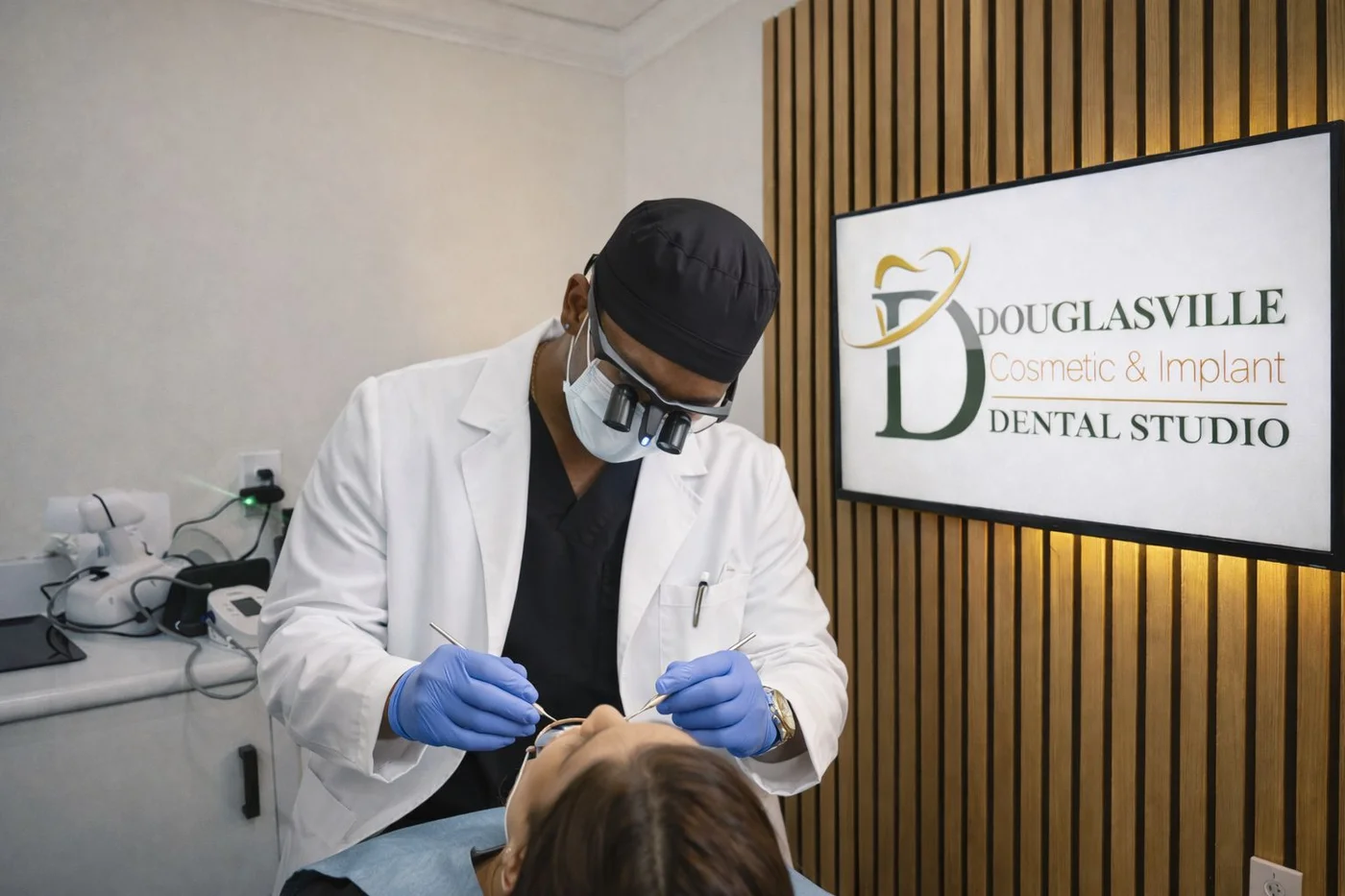
At Douglasville Cosmetic Implant & Dental Studio in Douglasville, GA, restorative dentistry services focus on repairing damaged teeth and replacing those that are missing. The goal is to restore comfort, function, and oral health so you can chew, speak, and smile with confidence. This page explains common treatments, benefits, and what to expect from start to finish.

Restorative Dentistry services we provided:
- Dental Crowns
- Dental Implants
- Dental Bridges
- Dental Fillings
- Dental Implant Restorations
- Dentures
- Partial Dentures
Restorative Dentistry Explained
Restorative dentistry addresses problems such as tooth decay, cracked or worn teeth, missing teeth, and failing older restorations. Treatment options range from small, conservative fillings to full-arch tooth replacement. Common procedures include tooth-colored fillings, inlays and onlays, dental crowns, root canal therapy, bridges, dental implants, and partial or full dentures. Each option serves a specific purpose, and your plan may combine several treatments for the best outcome.
Tooth-colored composite fillings rebuild areas of decay and are often the first line of care for small cavities. Inlays and onlays are lab-made restorations used when a cavity or fracture is too large for a filling but does not require a full crown. Dental crowns cover the entire visible part of a tooth to protect it after a fracture, a large filling, or a root canal. When a tooth cannot be saved, tooth replacement options include bridges, implants, and dentures. A dental bridge fills a gap by anchoring a replacement tooth to neighboring teeth. A dental implant replaces the tooth root and supports a crown for a solution that looks and feels natural.
Benefits of Restorative Dentistry
- Stops the spread of decay and protects remaining tooth structure.
- Restores chewing comfort for a more balanced diet and better digestion.
- Improves bite alignment and reduces strain on the jaw and neighboring teeth.
- Prevents shifting and overeruption by replacing missing teeth promptly.
- Enhances speech clarity and day-to-day confidence.
- Supports gum and bone health, especially with dental implants that stimulate the jaw.
How Restorative Dentistry Works
The process starts with a comprehensive exam, digital X-rays, and a discussion of your goals and concerns. dentist will review how different treatments work, such as how dental implants integrate with bone or when a crown is preferred over a large filling. A personalized plan is then created to address urgent needs first and map out longer-term solutions.
During treatment, comfort is a priority. Local anesthesia is used for most procedures, and options for added relaxation may be available. Many restorations, like crowns and some bridges, are completed over two visits: the first to prepare the tooth and take precise impressions, and the second to place the final restoration. Implant treatment involves several steps, including placement, healing, and attaching the final crown once the implant has fused with the bone.
What to Expect
Most small to moderate treatments, such as fillings and single crowns, involve mild soreness that improves within a day or two. More complex care, including dental implants or multiple extractions, can require a longer healing period with specific home care instructions. Expect to follow a soft diet as advised, avoid chewing on the treated area until cleared, and use any prescribed rinses or medications as directed.
Longevity depends on many factors. Well-cared-for fillings often last several years, while crowns and bridges can last a decade or more. Dental implants can last even longer with proper maintenance. Daily brushing and flossing, along with routine checkups and cleanings, help protect your investment and reduce the need for future repairs.
Frequently Asked Questions About Restorative Dentistry Services
An implant is a small titanium post placed in the jaw to act like a tooth root. After the bone heals around it, a custom crown is attached to restore chewing and appearance.
Both replace missing teeth effectively. A bridge uses neighboring teeth for support, while an implant stands alone. The right choice depends on bone levels, tooth health, and treatment goals.
With modern anesthesia, most patients feel pressure but not pain during the procedure. Soreness afterward is common and usually improves within a few days.
Fillings may last several years, while crowns often last 10 to 15 years or longer. Lifespan varies with oral hygiene, bite forces, and regular preventive visits.
Common materials include composite resin for fillings, porcelain or zirconia for crowns and bridges, and titanium for implants. Material choice depends on location and function.
A comprehensive exam and imaging help determine whether a filling, inlay, crown, bridge, implant, or denture is best. The plan is tailored to your oral health needs. If you are considering restorative dentistry services in Douglasville, GA, contact Douglasville Cosmetic Implant & Dental Studio at <a href="tel:770-920-8067">770-920-8067</a> to schedule a visit and discuss your options with Dr. Franklin C. Anya.
Book an Appointment